
Key Takeaways:
A non-US person who performs services entirely outside the US generally does not get a 1099-NEC. What matters is the payee’s US tax status and where the services were performed
Instead of a Form W-9 (the form US persons complete to certify their taxpayer status), a foreign contractor should complete Form W-8BEN (individuals) or Form W-8BEN-E (entities) to certify their foreign status
Work performed physically inside the US can generate US-source income, that may be reportable on Form 1042-S, sometimes with withholding
The 1099-NEC and 1099-MISC reporting threshold, and the threshold for certain Form 1099-MISC payments, rose from $600 to $2,000 for payments made from January 1, 2026 under the One Big Beautiful Bill Act, its first increase in decades
No 1099 doesn't mean the payment isn't taxable, or that the contractor is classified correctly
Why This Question Doesn't Have a One-Word Answer
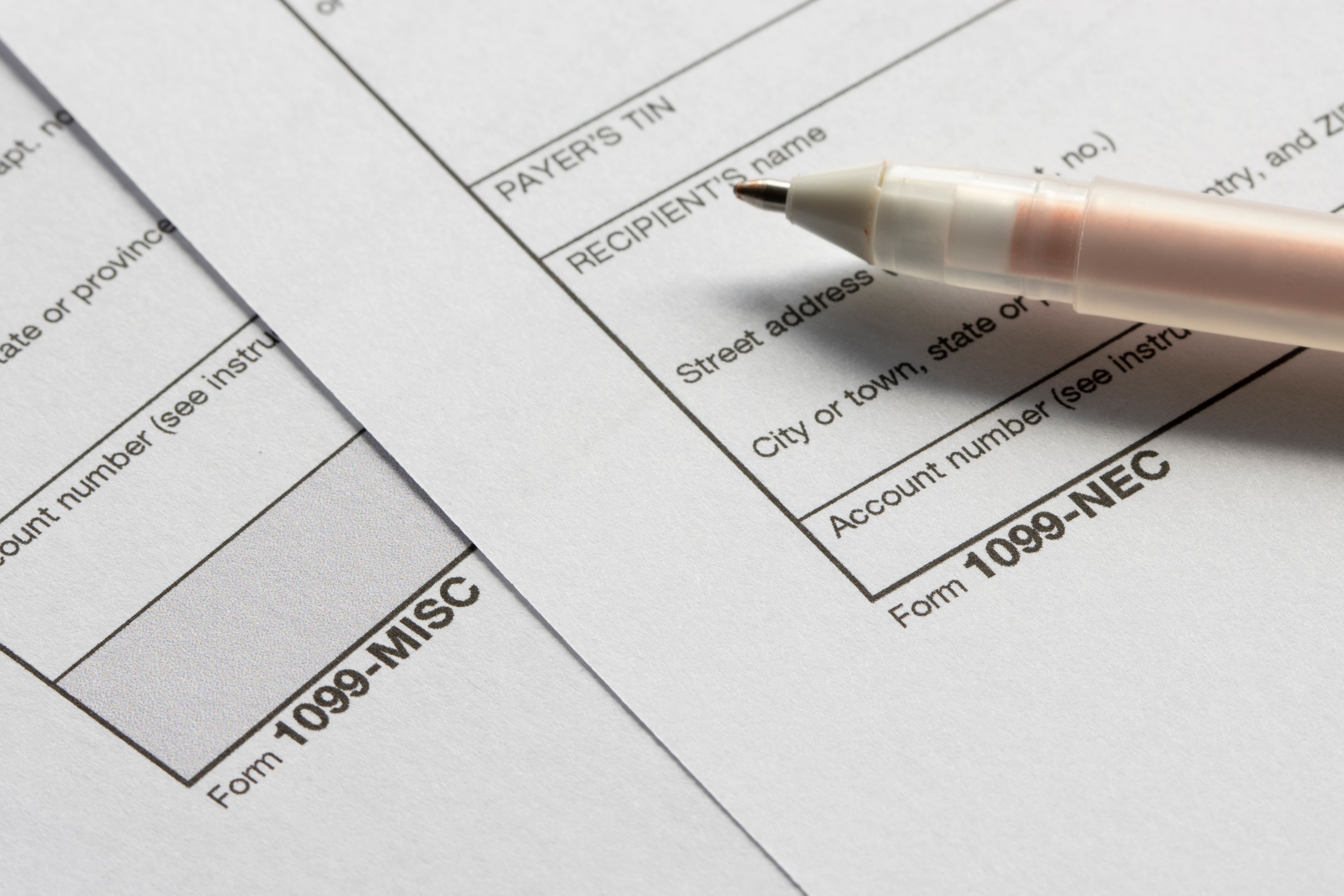
A Form 1099-NEC exists to report nonemployee compensation paid to a US person (a US citizen, a resident alien, or a US-based entity) for services performed as an independent contractor (IC). The form tells the IRS what a business paid so the recipient's income can be matched against what they report.
The moment a contractor is a foreign person rather than a US person, the reporting logic changes. Foreign-source income paid to a foreign person generally sits outside the 1099 system entirely, not because the income doesn't matter, but because a different set of forms and a different definition of taxable US income applies.

What Actually Determines Whether a 1099 Applies
Two key questions are the payee's US tax status and where the services were performed:
Tax residency status – The IRS cares whether the contractor is a "US person" (citizen, green card holder, or someone who meets the substantial presence test) or a foreign person. Payments for services to US persons may be reportable on Form 1099-NEC even when the work is performed abroad. Payments to foreign persons generally follow different reporting rules.
Where the work was physically performed – Income from services is sourced to the location where the services were performed, not the location of the client paying for them. A foreign contractor working from their home country is earning foreign-source income. A foreign contractor who performs some of the work in the US is, for that period, earning US-source income, even though they're the same person, on the same contract, doing the same job.
This is the detail that trips up distributed teams: a contractor's location on day one of the engagement isn't guaranteed to be their location for its duration.
Documenting Foreign Status: W-8BEN and W-8BEN-E
Where a US person completes a Form W-9 at onboarding, a foreign contractor should complete a Form W-8BEN (if they're an individual) or a Form W-8BEN-E (if they're contracting through an entity). These forms document foreign status. The form needed to claim any treaty withholding benefit depends on the payment; an individual claiming a treaty exemption for independent services performed in the US generally uses Form 8233.
A W-8BEN generally remains valid from the date it is signed through the last day of the third succeeding calendar year, unless a change in circumstances makes it incorrect, so it needs to be reissued periodically over the life of a long-running engagement, one more item that belongs in a recurring compliance check rather than a one-time onboarding step.
What if the contractor never returns the form? Without appropriate documentation, the payer must apply the relevant IRS presumption rules. Depending on the payment and the payee's presumed status, withholding and reporting obligations may arise. Collect and review the appropriate tax documentation before the first payment.
When Form 1042-S Applies Instead
If a foreign contractor's income is treated as US-source (because some or all of the work was physically performed in the US), Form 1042-S is generally the relevant reporting form, subject to the applicable rules. Withholding may also apply. An eligible individual seeking a treaty exemption for independent services performed in the US generally claims it on Form 8233, not Form W-8BEN.
This is a materially different compliance obligation than a standard contractor payment, and it's easy to miss when a company is only checking "is this person a US taxpayer?" rather than "where did this specific work happen?"
The mechanics matter too. The relevant withholding agent generally files Form 1042-S for reportable payments and Form 1042 as the annual withholding tax return. Both are due to the IRS by March 15 following the calendar year of payment, and the recipient copy of the 1042-S is due on the same date. That is a materially earlier deadline than most teams have in mind if their only reference point is the 1099 cycle.
What Changed for 2026
The reporting threshold for Form 1099-NEC and certain Form 1099-MISC payments increased from $600 to $2,000 for payments made starting January 1, 2026, under the One Big Beautiful Bill Act, its first increase in decades. From 2027 onward, the threshold adjusts annually for inflation, rounded to the nearest $100.
There are two things this change does not do: it doesn't apply to Form 1099-K (third-party payment processor reporting, which has its own separate $20,000-and-200-transaction threshold), and it doesn't make any income non-taxable. A contractor paid $1,500 in 2026 won't generate a 1099-NEC, but that $1,500 is still reportable income on their own return. The threshold changes what your business has to file, not what anyone owes.
It also has nothing to say about foreign contractors. Where the contractor is a foreign person paid for work performed outside the US, no 1099 is due at any amount, and the $2,000 figure never enters the calculation. The threshold matters for your US-person contractors; the appropriate documentation for foreign payees still matters.
Who Is Responsible for Getting This Right
Tax forms don't collect themselves, and who's responsible for chasing down a W-8BEN, tracking where a contractor physically did the work, or catching a non-resident alien case that needs a 1042-S instead of a 1099 depends on how the engagement is structured in the first place.
If you engage the contractor directly, the responsibility is yours. The IRS treats the paying business as the withholding agent: you collect and retain the W-8BEN before the first payment, you work out whether any of the services were performed on US soil, you determine whether Form 1042-S reporting or withholding applies to any US-source payments.. When that goes wrong, it is the payer, not the contractor, that faces penalties and can be held liable for tax that should have been withheld.
If you engage through a third party, its documentation, withholding and reporting responsibilities depend on the contract, payment flow and applicable withholding-agent rules. Confirm which party will collect tax forms, track where services are performed and make any required filings. What that arrangement does not do is settle the classification question underneath it, which still depends on how the working relationship actually operates day to day.
Frequently Asked Questions
Do I need a W-9 or a W-8BEN for a new contractor?
It depends on whether they're a US person or a foreign person, not on where your company is located. US persons complete a W-9. Foreign persons complete a W-8BEN (individuals) or W-8BEN-E (entities).
What happens if a foreign contractor works partly in the US?
The portion of their income tied to work physically performed in the US can become US-source income, which may need to be reported on Form 1042-S and may be subject to withholding, separate from any foreign-source income from the same engagement.
Does the 2026 threshold change mean I don't need tax forms for payments under $2,000?
No. The $2,000 threshold only affects whether a 1099 has to be filed; it doesn't remove the need to collect a W-9 or W-8BEN at onboarding, and it doesn't make the payment tax-free for the recipient.
Is having the right tax form the same as having a correctly classified contractor?
No. Tax documentation and worker classification are related but separate questions. A contractor can have a valid W-8BEN and still be misclassified. Classification is jurisdiction-specific and turns on the substance of the working relationship, not the contractual label or tax form.
The information provided is for general informational purposes only. Accuracy, completeness, or reliability is not guaranteed. This content does not constitute legal, tax, professional, or other advice and should not be relied upon. Any use of the information is at your own risk. Users are responsible for independently verifying any information, including with a qualified tax advisor.